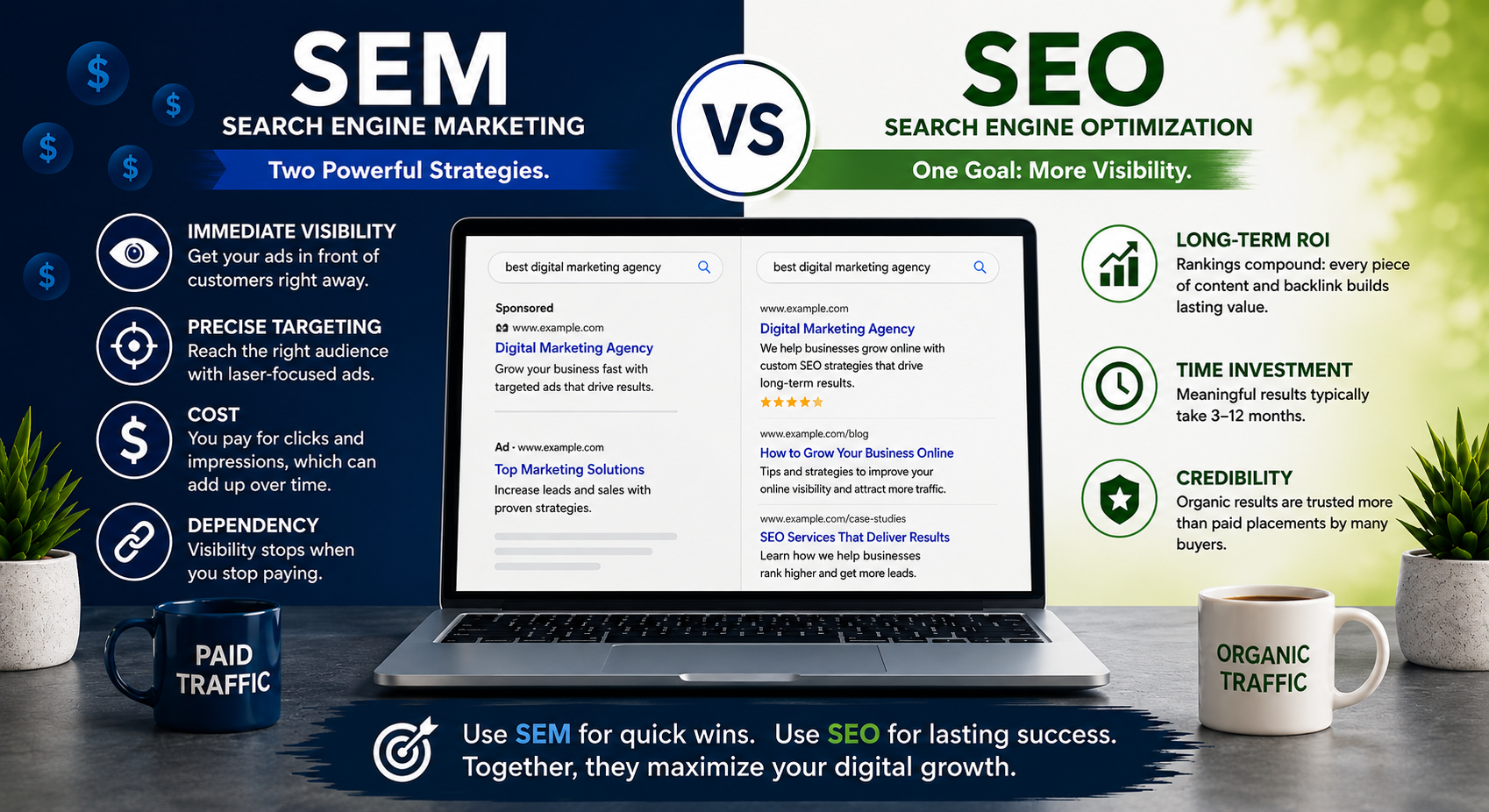
Search Engine Marketing (SEM) and Search Engine Optimization (SEO) are often presented as competing strategies. The reality is they serve different purposes, operate on different timelines, and are most powerful when used together. Here's how to think about both for your dealership.
SEM: Speed and Control
SEM — paid search advertising on Google and Bing — puts your dealership at the top of search results immediately. The moment your campaign goes live, you're visible for the keywords you're targeting.
- Immediate visibility — Day one exposure for high-intent searches
- Precise targeting — Control over keywords, geography, schedule, and device
- Cost — You pay for every click, and automotive keywords are competitive
- Dependency — Traffic stops the moment you stop spending
For dealerships, SEM is essential for new model launches, seasonal promotions, conquest campaigns, and any situation where you need traffic now rather than months from now.
SEO: Compound Growth
SEO builds organic search visibility over time. Unlike SEM, there's no per-click cost — once you've earned a ranking, that traffic is essentially free.
- Long-term ROI — Rankings compound; every piece of content and backlink builds lasting value
- Time investment — Meaningful results typically take 3–12 months
- Credibility — Organic results are trusted more than paid placements by many buyers
The Right Mix for Dealerships
Most dealerships need both. SEM handles immediate, high-intent purchase searches — buyers ready to buy now. SEO captures the broader research phase — buyers comparing models, reading reviews, learning about your dealership before they're ready to act. Together, they ensure you're visible at every stage of the buyer's journey.
The optimal budget split depends on your market competitiveness, current organic rankings, and business goals. A GDS Solutioneer will analyze your specific situation and recommend an allocation that maximizes your total search visibility relative to your budget.